




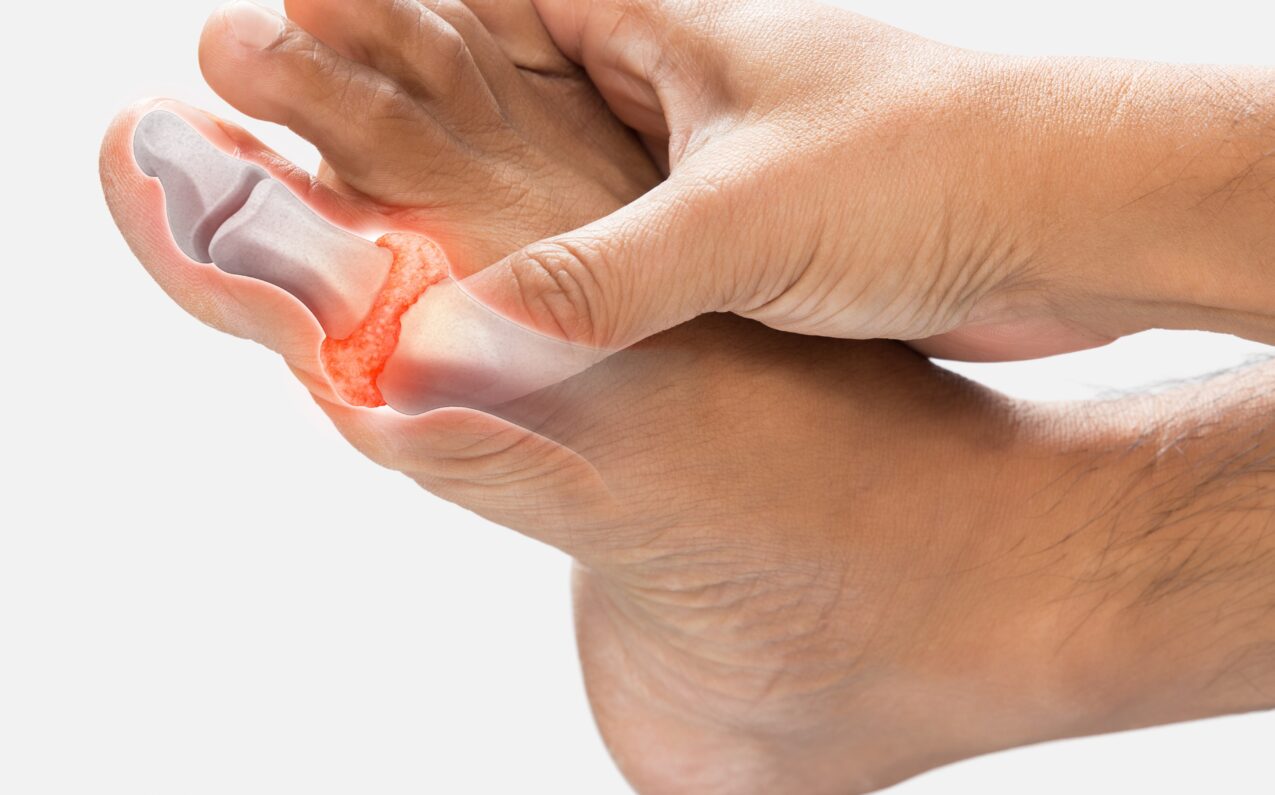
What is a Bunion?
A bunion, or hallux valgus, is one of the most common foot and joint deformities. This condition occurs when the big toe deviates toward the other toes, causing a prominent bony bump on the side of the foot at the base of the big toe.
This protrusion causes chronic pain and deformity in the shape of the foot and may lead to difficulty walking or wearing shoes, especially tight ones. Over time, the deformity can gradually worsen if left untreated.
Causes of Bunions
The main causes of bunions include:
- Genetic factors that affect foot shape and weight distribution while walking.
- Wearing tight or high-heeled shoes for long periods, which increases pressure on the big toe joint and causes deviation.
- Certain foot disorders, such as flat feet or hypermobility of the joints, which can worsen the condition.
Over time, constant pressure on the joint can lead to inflammation and cartilage wear, resulting in increasing pain and difficulty moving.
Treatment Options for Bunions
Treatment begins with a thorough evaluation by an orthopedic and joint specialist.
- In mild cases, symptoms can be managed with non-surgical methods such as comfortable medical shoes, orthotic supports, or spacers that reduce friction between the toes and relieve joint pressure.
- Advanced cases with severe pain or noticeable deformity may require corrective surgery to realign the bones and improve joint function.
Surgery and Post-Treatment Follow-Up
Bunion correction surgery is performed with precise techniques that preserve foot shape and restore joint balance. Regular follow-up and physiotherapy after surgery help accelerate recovery, improve walking ability, and prevent recurrence of the deviation.
Early attention to foot deformities is key to maintaining joint health, proper gait balance, and avoiding long-term pain and complications.